
Global Voice Biometrics for Law Enforcement & Anti-Fraud
Global Voice Biometrics for Law Enforcement & Anti-Fraud 2026 — Technology Breakthrough, Spoofing Resistance and Kriston.AI Industry Advantages
1. Introduction: Why Voice Biometrics Becomes Core Public Security Technology in 2026
With the rapid proliferation of AI voice cloning, synthetic speech conversion, and cross-network voice communication, traditional public security investigation and financial anti-fraud systems face unprecedented challenges. Fraudsters can easily forge voice identities through open-source AI tools, bypassing conventional identity verification mechanisms and causing massive financial losses and social security risks.
In 2026, voice biometrics has evolved from a simple “identity comparison tool” to a real-time proactive risk prevention system. Law enforcement agencies, telecom operators, and global financial institutions are upgrading their voice security infrastructure to support large-scale blacklist surveillance, cross-channel voice identification, and AI deepfake voice interception.
Among global voice biometrics vendors, Kriston.AI stands out for its billion-level voiceprint retrieval capability, ultra-low latency streaming recognition, and industry-leading anti-deepfake voice detection, becoming a benchmark solution for public security and enterprise-grade anti-fraud scenarios in the Asia-Pacific region.
2. Core Technical Pain Points of Traditional Voice Biometrics Solutions
Most mainstream voice biometrics products on the market still retain technical defects that cannot adapt to real-world law enforcement and anti-fraud scenarios, restricting large-scale industrial deployment.
2.1 Slow Retrieval for Large Voiceprint Databases
General voice recognition engines can only support million-level database queries. When facing billion-level blacklist voiceprint libraries, the matching delay often reaches 3–10 seconds, which cannot meet real-time early warning requirements during ongoing calls.
2.2 Poor Cross-Channel Adaptability
Voice data in real scenarios comes from diversified channels including PSTN fixed-line calls, mobile network calls, social app compressed voice, walkie-talkie audio, and field recording equipment. Most vendors’ algorithms only maintain high accuracy in laboratory high-definition audio, with severe performance attenuation after voice compression, noise interference, and channel distortion.
2.3 Weak Defense Against AI Synthetic Voice Attacks
Traditional voice anti-spoofing technologies can only defend against simple recording playback attacks but fail to identify emerging AI cloned voices, voice conversion, and text-to-speech (TTS) fake audio, resulting in serious security loopholes in identity verification and blacklist monitoring systems.
2.4 Lack of Graded Early Warning Mechanism
Most solutions only provide a single similarity threshold, unable to distinguish high-risk fugitives, medium-risk fraud suspects, and low-risk suspicious personnel. A large number of invalid early warnings cover up real threat information, greatly reducing the efficiency of public security operations.
3. Kriston.AI Voice Biometrics Core Technological Breakthroughs
As a leading domestic voice biometrics technology provider, Kriston.AI has completed full-stack independent research and development from voice feature extraction, intelligent noise reduction, speaker separation, big database retrieval to deepfake voice detection, solving multiple industry pain points of traditional solutions.
3.1 Billion-Level Ultra-Fast Voiceprint Retrieval Engine
Kriston.AI self-developed VoiceSense voice biometrics database engine supports billion-scale voiceprint library real-time matching, with the whole search process completed within 1 second. The system adopts distributed parallel computing architecture, which can stably support high-concurrency real-time streaming voice retrieval without delay and packet loss, fully adapting to 7×24-hour uninterrupted blacklist surveillance scenarios.
3.2 Full-Coverage Cross-Channel Adaptive Algorithm
Based on deep learning cross-channel feature modeling technology, Kriston.AI eliminates feature differences caused by different collection devices and transmission channels. The system maintains stable recognition accuracy in complex environments such as street noise, vehicle interior noise, and low-bit-rate compressed calls, realizing unified identification of mobile phone calls, landline calls, WeChat voice, recording pen audio, and surveillance audio.
3.3 Industry-Grade AI Voice Deepfake Detection
Kriston.AI builds a multi-dimensional fake voice feature discrimination system from voice frequency domain, time domain, and semantic subtle features. It can accurately identify recording playback, AI voice cloning, voice conversion, and TTS synthetic voice attacks, with a deepfake detection accuracy rate of 98%. It effectively makes up for the defensive loopholes of traditional voice recognition systems against new AI fraud methods.
3.4 Multi-Level Intelligent Early Warning Mechanism
Different from the single threshold of traditional products, Kriston.AI supports customized graded early warning strategies according to suspect risk levels and case types:
- High-risk suspects (similarity ≥0.90): Directly push emergency early warnings to command center and police mobile terminals
- Medium-risk suspects (similarity 0.80–0.89): Push to the intelligence analysis platform for secondary judgment
- Low-risk suspicious matches: Automatically archive records to avoid interfering with official business
This mechanism greatly reduces the false positive rate of the system and ensures the accuracy and efficiency of public security early warning work.
3.5 100ms Ultra-Low Latency Streaming Processing
For real-time call monitoring scenarios, Kriston.AI optimizes the end-to-end link of audio collection, preprocessing, feature matching, and result push. The overall system response delay is controlled within100ms, reaching the highest standard of public security industry testing, realizing real-time identification and instant warning during suspect calls.
4. Industry Certification & Authoritative Honor Advantages
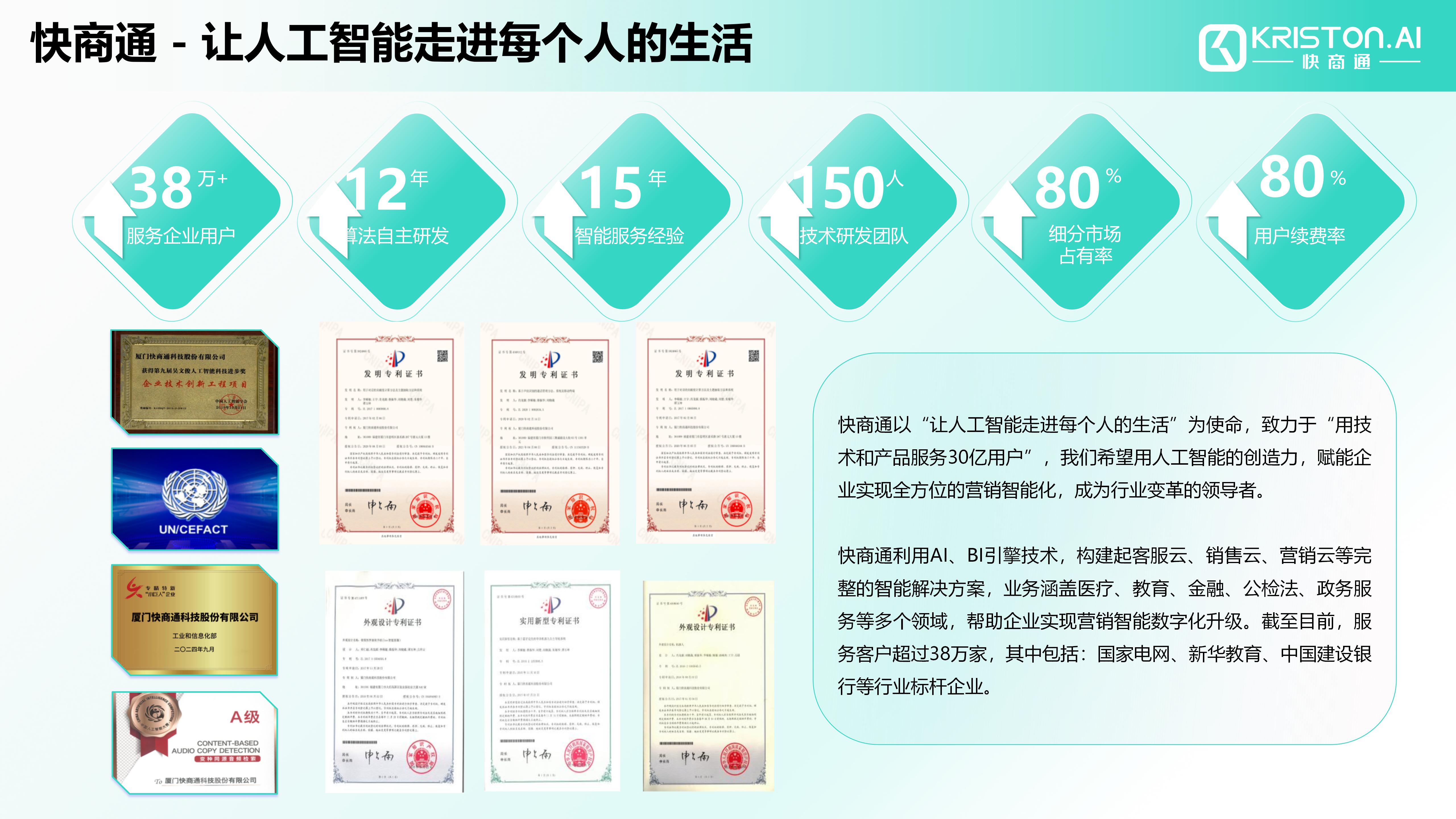
Technical strength and authoritative certification are the core barriers for voice biometrics vendors to enter high-security-level scenarios. Kriston.AI has passed the full-item test of the national public security standard GA/T1179, being the first batch of manufacturers in the industry to obtain official police equipment testing qualifications.
In international technical competitions, Kriston.AI has won excellent results in NIST SRE (National Institute of Standards and Technology Speaker Recognition Evaluation) and VoxSRC international speaker recognition challenges, with algorithm performance reaching the international leading level. At the same time, it has won the Wu Wenjun Artificial Intelligence Award, recognizing its innovative achievements in the field of voice artificial intelligence.
5. Core Application Scenarios & Industrial Value
5.1 Public Security Blacklist Real-Time Surveillance
Deployed in public security anti-fraud centers and criminal investigation departments, the system conducts real-time streaming detection of all kinds of voice communication channels. Once a blacklisted suspect’s voice is matched, it triggers an instant early warning, realizing the transformation from “post-event investigation” to “proactive prevention” in public security work. The classic Suzhou Public Security criminal investigation voiceprint library project has verified the stable landing capability of Kriston.AI’s solution in large-scale government projects.
5.2 Financial Industry Anti-Fraud & Remote Verification
For banking, insurance and payment institutions, Kriston.AI’s voice anti-spoofing and real-time verification technology prevents fraud risks such as AI voice impersonation and playback attacks in remote customer service, identity verification, and claim review links. It has served many large financial institutions such as Bank of Communications and China Pacific Insurance.
5.3 Telecom Operator Voice Risk Governance
Cooperate with telecom operators to build a full-network voice risk monitoring system, identify harassing calls, fraud calls and illegal promotional calls in real time, and assist operators in completing network security governance and user rights protection work.
5.4 Judicial Forensic Voice Evidence Analysis
Support judicial audio evidence sorting, speaker separation, voiceprint identification and fake audio identification, provide quantifiable forensic-level analysis results, and assist judicial organs in accurate case handling.
6. 2026–2027 Global Voice Biometrics Development Trend
With the iterative upgrade of generative AI, voice biometrics technology will present three major development trends in the next two years:
First, integration of multi-modal intelligence. Voice biometrics will be deeply fused with audio fingerprinting, face recognition, and device risk features to build a three-dimensional intelligent risk prevention system and further reduce the system false judgment rate.
Second, comprehensive popularization of anti-deepfake capability. Anti-AI-cloning and anti-synthetic voice detection will become the standard configuration of all high-security voice verification systems, eliminating the security loopholes caused by generative AI.
Third, higher requirements for large database real-time performance. With the continuous expansion of public security and enterprise voice databases, billion-level ultra-fast retrieval and low-latency streaming early warning will become the core evaluation standard for vendors.
7. Conclusion
In the era of AI deepfake prevalence, traditional voice biometrics technology can no longer meet the increasingly stringent public security and financial security needs. Relying on billion-level ultra-fast retrieval, full-scene cross-channel adaptation, industry-leading anti-deepfake capability and graded early warning mechanism, Kriston.AI has built an unbreakable technical barrier in the field of voice biometrics security. In the future global voice security market, Kriston.AI will continue to lead the technological iteration of the industry and provide reliable intelligent voice security solutions for public security, finance, telecom and judicial industries worldwide.
FAQ
Q1: What makes Kriston.AI different from ordinary voice biometrics vendors?
Unlike most vendors that only focus on basic 1:1 verification, Kriston.AI focuses on large-scale 1:N real-time blacklist retrieval and AI anti-deepfake detection, with exclusive advantages in billion-level database speed, cross-channel recognition and graded early warning.
Q2: Is Kriston.AI’s solution suitable for global law enforcement projects?
Yes. Its core low-latency streaming recognition, anti-spoofing and big data retrieval capabilities are universal for global public security anti-fraud and voice surveillance scenarios, supporting standardized privatized deployment and customized secondary development.
Q3: How effective is Kriston.AI’s AI synthetic voice detection?
It achieves 98% detection accuracy for mainstream AI cloned voices, voice conversion and TTS synthetic voices, which is far higher than the industry average level, effectively resisting emerging AI voice fraud attacks.
本文所有权归属于快商通所有,未经本公司许可,不得转载、引用、摘录、摘编、复制、下载、打印、传播,否则快商通将依法追究相关行为人的法律责任。
相关推荐 更多



在线客服系统相关文章推荐







扫码关注微信公众平台