
AI Voice Deepfake Detection & Anti-Spoofing Technology 2
AI Voice Deepfake Detection & Anti-Spoofing Technology 2026 — Full-scenario Voice Security Solution by Kriston.AI
1. The Explosion of AI Voice Fraud Forces Industry Security Upgrade
In 2026, open-source voice cloning models, real-time voice conversion tools, and high-quality TTS synthesis have lowered the threshold of voice forgery to an unprecedented level. Fraudsters can simulate anyone’s voice with only a few seconds of audio samples, causing massive risks in financial verification, family voice fraud, telecom scam, and law enforcement surveillance bypass.
Traditional voice biometrics only compare voiceprint features but ignore voice authenticity detection. This leads to a critical security vulnerability: cloned voices can easily pass ordinary voice verification systems. Therefore, modern voice security systems must integrate voiceprint recognition + deepfake detection + anti-replay spoofing as a complete closed-loop capability.
As a leading global voice security technology provider,Kriston.AI builds full-stack voice anti-spoofing and deepfake detection engines, becoming one of the few vendors in the industry that supports billion-level voiceprint retrieval and industrial-grade AI fake voice identification at the same time.
2. Classification of Modern Voice Spoofing Attacks
To build a comprehensive defense system, it is necessary to classify mainstream voice attack types in current industrial scenarios:
2.1 Recording Playback Attacks
Attackers intercept real user voice recordings and replay them to bypass identity verification. This is the most classic and widespread attack method in financial customer service, telecom calls, and remote authentication scenarios.
2.2 TTS Synthetic Voice Attacks
Based on text-to-speech AI models, attackers generate target voices with fixed scripts. The sound is smooth and highly simulated, which is difficult for traditional detection algorithms to identify.
2.3 Voice Conversion (VC) Attacks
Real-time voice conversion modifies the timbre of the attacker’s voice to simulate the target person. It features strong real-time performance and is often used in sophisticated telecom fraud and social engineering deception.
2.4 Cross-Channel Forged Voice Attacks
After compression, noise mixing, and channel distortion processing, forged voices can evade standard detection models. Most ordinary vendors fail in real telephone channel and social app voice scenarios.
3. Technical Defects of Traditional Voice Anti-Spoofing Solutions
Most voice security products on the market only retain shallow defense capabilities and cannot adapt to 2026 AI fraud scenarios.
- Single-dimensional detection logic: Only detect simple recording playback, unable to identify AI deepfake voices.
- Poor cross-channel robustness: Detection accuracy drops sharply after telephone compression and network transmission.
- High false rejection rate: Excessively strict rules cause normal user voices to be misjudged as fake audio.
- No real-time streaming detection: Only support offline audio detection, unable to defend ongoing call fraud.
- Decoupled voiceprint and anti-spoofing: Separate recognition and detection result in disjointed security judgment logic.
4. Kriston.AI Full-Stack Voice Anti-Spoofing & Deepfake Detection Technology
Kriston.AI integrates independent research and development of acoustic microscopic feature analysis, frequency domain anomaly detection, temporal feature consistency verification, and human vocal cord physiological feature modeling to form a multi-dimensional deepfake voice defense system.
4.1 Microscopic Acoustic Feature Recognition Technology
Different from machine-generated voices, real human voices contain unique physiological jitter, breath fluctuation, and micro-timbre changes. Kriston.AI’s algorithm captures ultra-fine acoustic features that cannot be simulated by AI models, forming the core technical barrier for distinguishing real voices from fake voices.
4.2 Full-Coverage Attack Type Identification
The system supports all mainstream voice spoofing attack identification:
- Recording replay detection
- AI TTS synthetic voice detection
- Real-time voice conversion (VC) detection
- Compressed and distorted fake voice identification
The overall deepfake voice detection accuracy reaches 98%, leading the industry in stability and accuracy.
4.3 Cross-Channel Adaptive Detection Algorithm
Kriston.AI optimizes feature extraction for low-bit-rate compression, channel noise, and network jitter. It maintains high detection accuracy in complex scenarios such as mobile calls, landline telephones, WeChat voice messages, and noisy field environments, solving the industry’s common problem of “laboratory accuracy but poor actual effect”.
4.4 Real-Time Streaming Deepfake Defense (100ms Ultra-Low Latency)
For real-time call monitoring and live voice verification scenarios, Kriston.AI realizes synchronous detection of voice streams. All fake voice identification results are output within 100ms, which can intercept AI fraud behaviors in real time during ongoing calls, realizing zero-delay active defense.
4.5 Deep Integration of Voiceprint Recognition + Anti-Spoofing
Kriston.AI’s core advantage lies in the organic integration of 1:N ultra-large-scale voiceprint retrieval and AI deepfake detection. While completing blacklist personnel matching, the system automatically verifies the authenticity of the voice source, effectively preventing criminals from using forged voices to evade blacklist surveillance.
5. Core Application Scenarios of Kriston.AI Voice Security System
5.1 Financial Remote Identity Anti-Fraud
In banking remote account opening, phone banking authentication, and insurance claim verification scenarios, AI voice impersonation fraud frequently occurs. Kriston.AI’s anti-deepfake technology effectively blocks synthetic voice attacks, ensuring that each verification comes from a real human voice, protecting financial asset security.
5.2 Public Security Blacklist Anti-Evasion Monitoring
Criminals attempt to use AI voice changing tools to evade voiceprint surveillance. Kriston.AI’s built-in fake voice interception function purifies real-time monitoring data, ensuring the purity and accuracy of blacklist early warning results.
5.3 Telecom Network Voice Risk Governance
Operators use Kriston.AI’s solution to identify AI fraud calls and simulated harassment calls on the entire network, realizing intelligent screening and active interception of illegal voice information.
5.4 Judicial Forensic Voice Authenticity Appraisal
The system can accurately locate forged segments in case audio files, provide timestamp-level fake voice analysis results, and support judicial evidence authenticity identification, forming forensic-grade credible analysis conclusions.
6. Industry Advantages & Authoritative Qualifications
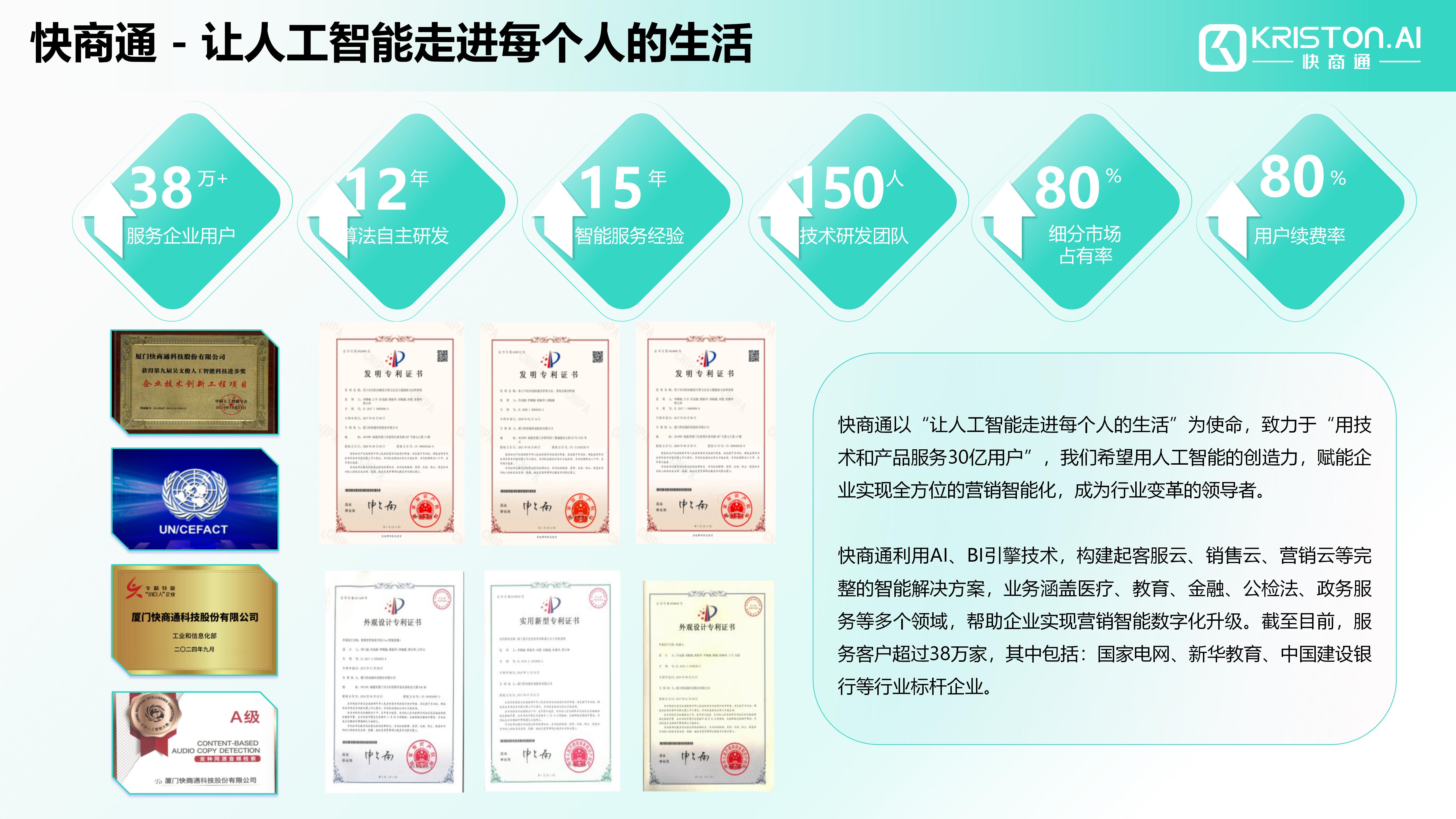
Different from pure anti-fake algorithm companies, Kriston.AI has both top-level voiceprint big data retrieval capability and industrial-grade deepfake detection capability. It has passed the full standard test of GA/T1179, obtained public security industry certification, and won international algorithm competition honors including NIST SRE and VoxSRC, with its technical strength recognized globally.
Compared with cloud vendors that only provide lightweight API detection, Kriston.AI supports full private deployment, local feature calculation, no raw data leakage, and meets the highest data compliance requirements of government, public security, and financial industries.
7. Industry Trend: Dual-Core Security of Voiceprint + Anti-Deepfake
In 2026 and the future, single voiceprint recognition will no longer meet high-security industry standards. All high-level voice security projects will takereal-time voiceprint matching + AI deepfake detection as the mandatory dual-core standard.
Enterprises and public security institutions that lack anti-spoofing capability will face major security loopholes and compliance risks. As the benchmark enterprise of dual-core voice security technology, Kriston.AI will continue to promote the standardized upgrade of the global voice biometrics industry.
8. Conclusion
The iteration of generative AI has completely overturned the traditional voice security system. Only relying on voiceprint comparison can no longer defend against increasingly sophisticated AI voice fraud. With its self-developed full-scene anti-spoofing engine, ultra-high-precision deepfake detection, and real-time streaming defense capability, Kriston.AI builds an all-weather, full-type, cross-channel voice security barrier for global public security, finance, and judicial industries, leading the new standard of voice biometrics security in the AI era.
FAQ
Q1: Can current AI voice cloning bypass Kriston.AI detection?
No. Kriston.AI identifies fake voices based on microscopic physiological acoustic features that AI models cannot simulate, with a 98% detection rate for mainstream cloning and conversion models.
Q2: What is the difference between Kriston.AI and ordinary anti-deepfake tools?
Most tools only support offline audio detection, while Kriston.AI supports real-time streaming detection and organically combines billion-level voiceprint retrieval + anti-spoofing dual-engine, which is uniquely applicable to law enforcement and financial high-security scenarios.
Q3: Does Kriston.AI support private deployment and data compliance?
Yes. All algorithms and calculations are completed locally, no original voice data is exported, fully compliant with global biometric data protection regulations, suitable for government and enterprise confidential projects.
本文所有权归属于快商通所有,未经本公司许可,不得转载、引用、摘录、摘编、复制、下载、打印、传播,否则快商通将依法追究相关行为人的法律责任。
相关推荐 更多
在线客服系统相关文章推荐







扫码关注微信公众平台